
Typical match: Grade 1 students commonly use OLSAT 8 Level B, based on Pearson’s scope-and-sequence chart. Confirm your school’s actual test level and format before choosing preparation materials.
What to focus on
Picture-supported questions remain a helpful entry point. Discuss categories and simple changes in size, number, or direction.
Try an original example
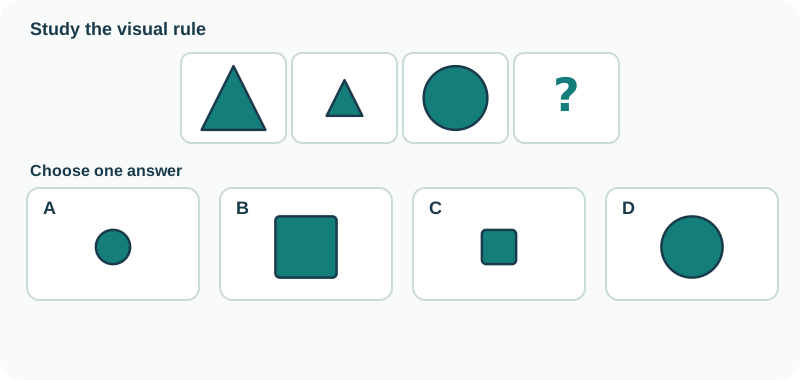
Try a figural analogy
Which figure completes the second pair?
Show the answer and visual explanation
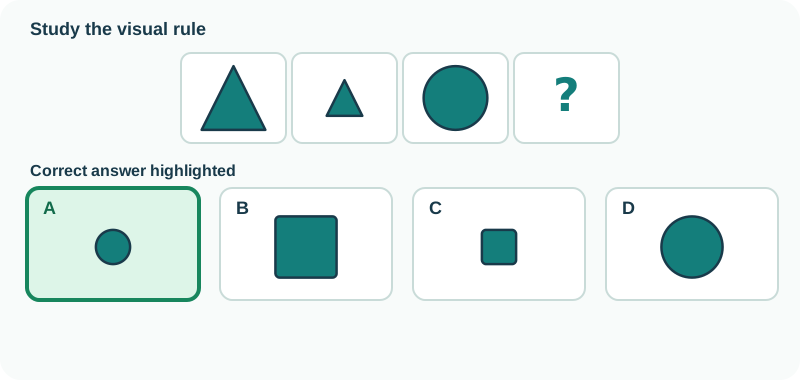
Answer A: A small circle. The size changes from large to small; the shape remains a circle.
This is a learning example written for OLSAT.net, not an official test item. See the matching question-type lesson for another worked example.
Reasoning skills for this grade
The typical OLSAT 8 match is Level B. Pearson’s scope chart lists picture analogies and classifications, plus figural changes for this stage. The exact form and delivery are chosen by the school.
Free OLSAT 1st Grade sample questions with answers
Try these three independently written reasoning exercises before the interactive practice session. They are simplified learning examples, not official OLSAT items, a full-length test, or a prediction of the question mix your school will use.
Have an adult read the short problems when needed. Invite the child to describe the rule or retell the direction before selecting an answer; reading speed should not become the goal of this practice.
Sample 1: Listening to directions
Mia stands before Leo in a line. Leo stands before Noor. Who is last?
A. Mia B. Leo C. Noor
Answer: C. Noor. The order is Mia, Leo, Noor. Put three toys in that order to make the relationship visible.
Sample 2: Arithmetic reasoning
Sam has 5 counters. He gives 2 to a friend, then receives 1. How many counters does he have now?
A. 2 B. 3 C. 4 D. 6
Answer: C. 4. Start with 5, subtract 2 to get 3, then add 1 to get 4. Follow both changes rather than stopping after the first.
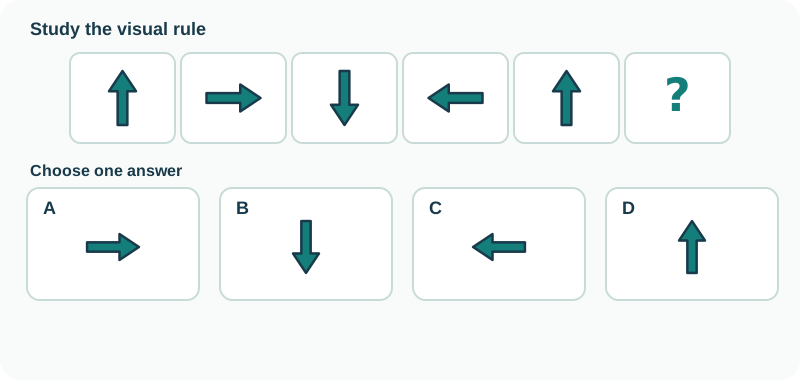
Sample 3: Figural series
Which arrow comes next?
Show the answer and visual explanation
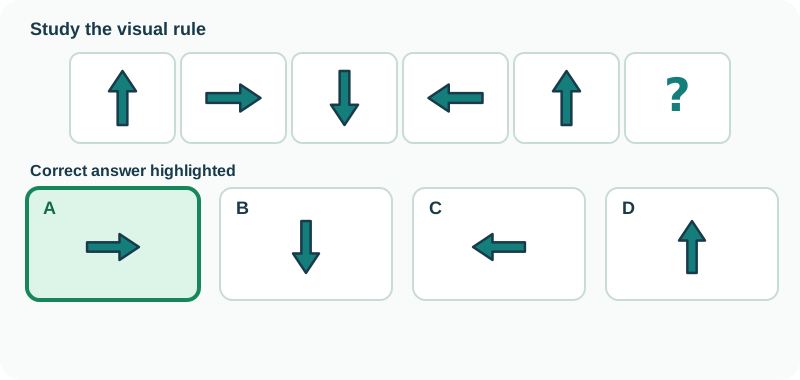
Answer A: →. The arrow turns one quarter-turn clockwise each time.
What to do after these examples
Ask the student to explain one answer without looking at the key. If a direction or relationship was unfamiliar, visit the OLSAT question-type lessons and return to that skill. Then try the free Level B practice test for ten original questions with explanations.
Review mistakes as clues about what to practice next. A percentage on this small set is not an official OLSAT score. See how OLSAT scores are reported and use the two-week preparation plan to organize short sessions.
Common mistakes to discuss together
- Starting before understanding the directions: describe what the question asks before choosing.
- Checking only part of a pattern: test the rule against every picture or relationship shown.
- Remembering an answer instead of the reasoning: ask how the rule would work with a new example.
A short preparation plan
Read directions aloud when appropriate, ask what stayed the same, and mix a few familiar and new items.
- Ask the school which level, form, and administration method it will use.
- Start with untimed examples and discuss the reasoning step.
- Try the free Level B practice session when directions feel familiar.
- Review explanations and finish with a calm routine.
Ask the school
Will directions be read aloud? Is testing on paper or online? How will results be considered for the student? The answer depends on the local school plan.
Source: Pearson OLSAT 8 product overview and Pearson OLSAT 8 scope-and-sequence brochure. OLSAT.net is an independent educational resource; examples here are original and are not official test questions.