
This original OLSAT.net visual guide gives families a quick starting point. The full explanation is below the image for accessibility and additional context. For a sharable reference, link to this page so readers can see the transcript, sources, and current version.
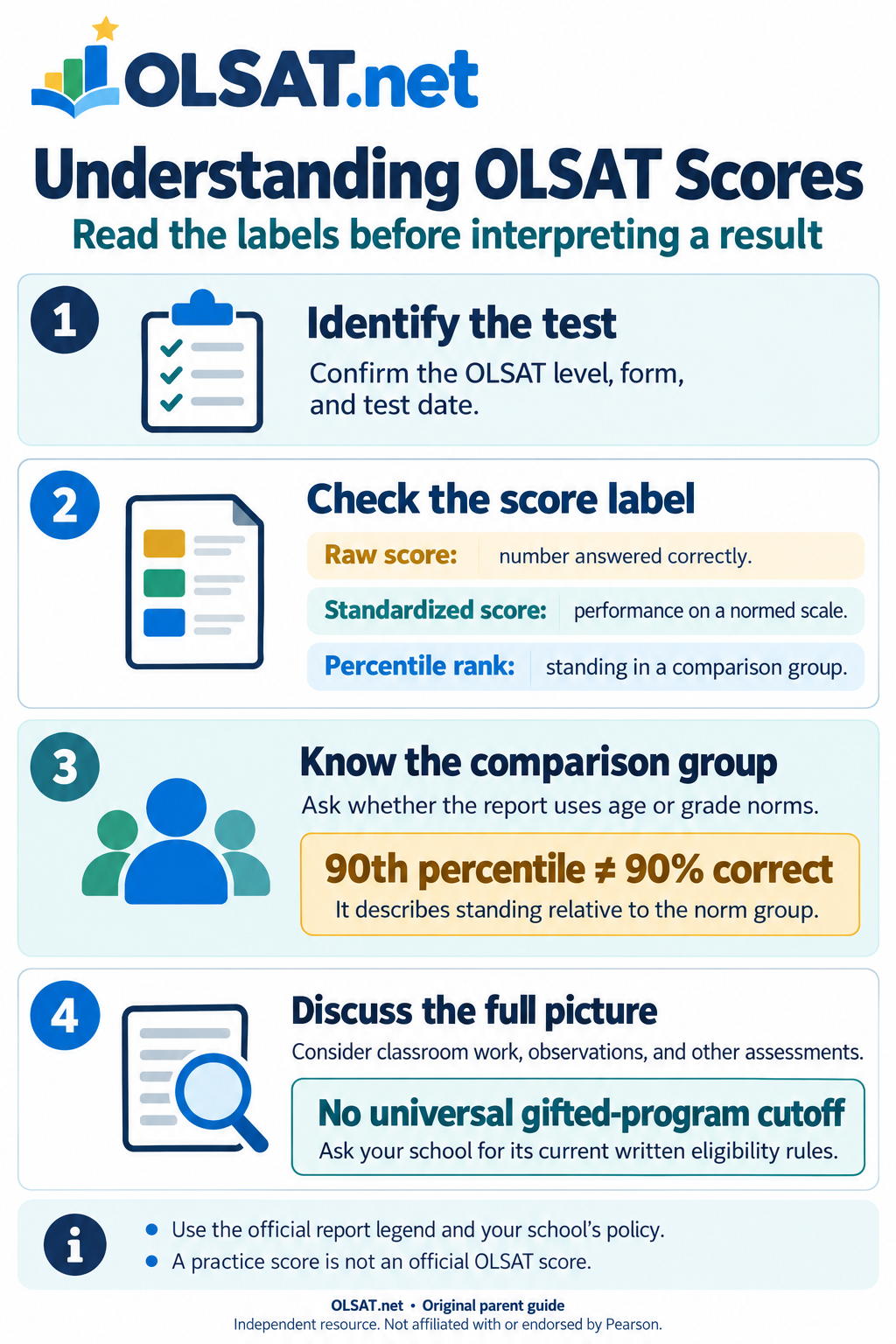
Read OLSAT Score Report Infographic: Four Questions for Parents and transcript · Download full-size PNG
Four score-report questions in text
- Which test was given? Ask for the OLSAT level, form, and test date.
- Which score are we discussing? A raw score is the number answered correctly. A standardized score expresses performance on a normed scale. A percentile rank describes standing in a comparison group. These express different things; read the label and legend on the actual report.
- Who is the comparison group? Ask whether a score uses age or grade norms and which group applies to your child. The 90th percentile is not 90% correct; it describes standing relative to the norm group.
- What else does the school consider? Discuss classroom work, observations, and the written local gifted eligibility rules. There is no universal OLSAT cutoff for every program. A practice score is not an official OLSAT score.
See our OLSAT scores guide for terms and limitations, and the gifted score guide for school-policy questions.
Source and editorial note
General parent reading guidance; consult the official score report and local school policy. Background on OLSAT 8: Pearson OLSAT 8 overview brochure.
OLSAT.net is an independent educational resource and is not affiliated with or endorsed by Pearson. Schools determine actual testing and placement decisions.